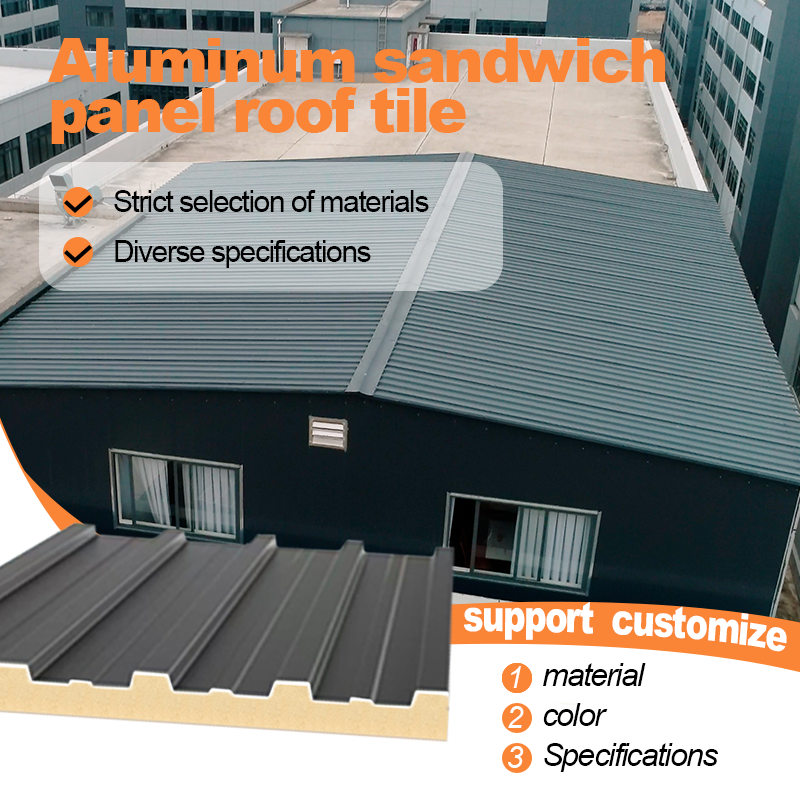
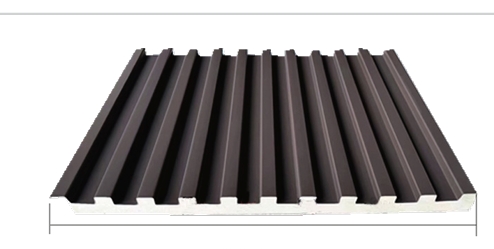
PU sandwich panel (polyurethane sandwich panel) and rock wool panel are two common types of building insulation boards, which have significant differences in core materials, performance characteristics, and applicable scenarios, each with its own advantages and disadvantages. The specific comparison is as follows:Introduction to two types of board foundationsPU sandwich panel (polyurethane sandwich panel) and rock wool panel are two common types of building insulation boards, which have significant differences in core materials, performance characteristics, and applicable scenarios, each with its own advantages and disadvantages. The specific comparison is as follows:
Introduction to two types of board foundations
PU sandwich panel
PU sandwich panel is an insulation board made of polyurethane rigid foam as the core material and aluminum alloy/stainless steel plate as the surface layer composite. It is formed by high-pressure foaming process and focuses on excellent insulation performance.PU sandwich panel is an insulation board made of polyurethane rigid foam as the core material and aluminum alloy/stainless steel plate as the surface layer composite. It is formed by high-pressure foaming process and focuses on excellent insulation performance.
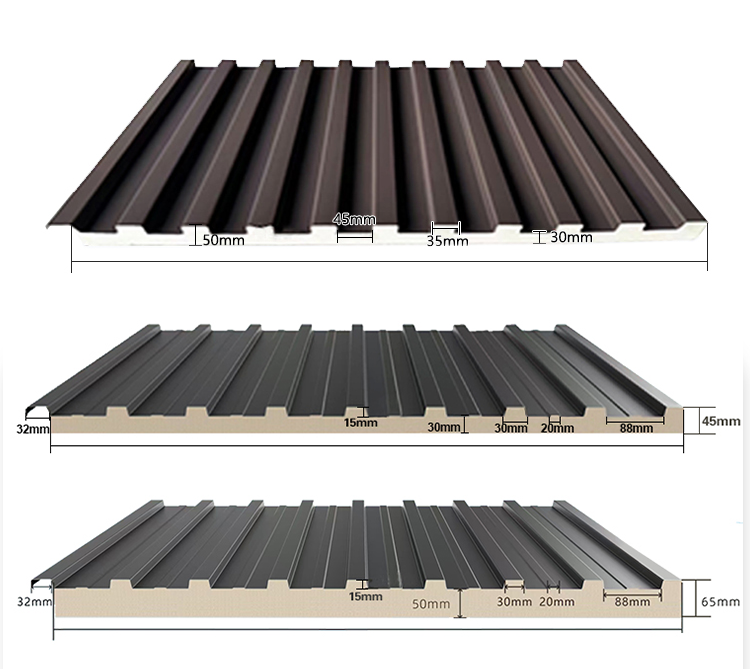
Rock wool board
Rock wool board is an inorganic fiber insulation board made from natural basalt as the main raw material, which is melted and fiber-reinforced at high temperatures. It focuses on outstanding fire resistance.
Core performance comparison| Performance dimension | PU sandwich panel | rock wool board |
| Thermal conductivity coefficient | ≤0.022W/(m·K), Excellent thermal insulation performance | ≈0.043W/(m·K), Weak insulation performance compared to PU |
| Fire rating | The standard is B1 level, and some high-end products can reach A-level | Natural non combustible, reaching the highest level A1 |
| Water absorption performance | High closed cell rate, non absorbent, good waterproof and moisture-proof properties | Ordinary products are prone to water absorption, and their insulation performance decreases when they become damp |
| Compressive strength | Integrated molding, high strength, up to 200kPa or more | Relatively low strength, poor toughness |
| Weight and Construction | Lightweight texture, easy to lift and install | High density and weight make construction and hoisting more difficult |
| Environmental protection and hygiene | Uniform foaming, not easy to store dirt, suitable for clean places | The flocculent structure is prone to parasitic bacteria, and the fibers may be exposed |
| Price cost | High material prices and large initial investment | Lower price, lower overall cost |
Differences in Applicable Scenarios
PU sandwich panels are more suitable for scenarios that require high insulation and moderate fire resistance, such as cold chain cold storage, refrigerated carriages, large-span industrial plant roofs, clean workshops, etc. They can save wall space and reduce construction steel costs.Rock wool board is more suitable for scenarios with extremely high fire safety requirements, such as high-rise building exteriors, chemical plants, warehouses, scientific research office buildings, etc. A-level fire resistance can effectively prevent the spread of fire.If you have a clear usage scenario, can I help you analyze which one is more suitable for your needs? Do you need me to make targeted selection recommendations for you?PU sandwich panels are more suitable for scenarios that require high insulation and moderate fire resistance, such as cold chain cold storage, refrigerated carriages, large-span industrial plant roofs, clean workshops, etc. They can save wall space and reduce construction steel costs.
Rock wool board is more suitable for scenarios with extremely high fire safety requirements, such as high-rise building exteriors, chemical plants, warehouses, scientific research office buildings, etc. A-level fire resistance can effectively prevent the spread of fire.
If you have a clear usage scenario, can I help you analyze which one is more suitable for your needs? Do you need me to make targeted selection recommendations for you?